Showing posts with label Toyota. Show all posts

Saturday, June 19, 2010

Personal Luxury Cars | Toyota FT-86 to be called FR-S when it reaches production?

Toyota FT-86 Concept


It's been awhile since we've heard anything on the tasty little Toyota FT-86 Concept, but it looks like we may finally have an idea of what the car will be called when it hits showrooms. If the rumors buzzing around the Toyobaru forums are to be believed, the Japanese manufacturer won't resurrect any of its fabled names from the company's past. Instead, it's possible that the sportscar may carry an FR-S badge. Toyota just filed a trademark application for the name, so there's a good chance that this particular internet whisper may have some meat to it.

We haven't completely decided where we stand on the FR-S name, partly because we had become so accustomed to calling the front-engine, rear-wheel drive heathen the FT-86. In the end, though, we don't really care what's on the car's badges so long as it makes it to production as an affordable, strong-performing coupe. Toyota could use something with a pulse in a big way, and a spiritual successor to the AE-86 Corolla would be just the ticket.

[Source: Toyobaru.net]

Friday, May 21, 2010

Governator says Tesla teaming up with Toyota in Cali

Tesla Model S sedan

California Governor Arnold Schwartzenegger has apparently let slip ahead of a scheduled 5pm Pacific announcement that Tesla Motors will be teaming up with Toyota to build electric cars.

While some might speculate that the agreement could result in the re-opening of Fremont's idle New United Motor Manufacturing Inc. plant (NUMMI), SFGate says that this is somewhat unlikely. Any production agreement will likely involve the forthcoming Model S sedan, and NUMMI's facilities are significantly larger than what the model will require, as it was originally scaled to accommodate the joint venture between Toyota and General Motors which required much greater capacity. The smart money is on a new factory location, probably in Downey, CA (in Los Angeles County).

It is not yet clear what Toyota will bring to the table or what, if any money or stock is changing hands with this rumored agreement. Also, no word yet on how Mercedes-Benz feels about all this – the German automaker already has a 10 percent stake in the company after opening its coffers to the struggling EV manufacturer back in May of 2009.

[Source: SFGate]

Wednesday, April 7, 2010

2011 Toyota Sienna Car Picture

2011 Toyota Sienna Front Angle View2011 Toyota Sienna Front Angle View

2011 Toyota Sienna Interior2011 Toyota Sienna Interior

2011 Toyota Sienna Engine2011 Toyota Sienna Engine

2011 Toyota Sienna Wheel2011 Toyota Sienna Wheel

2011 Toyota Sienna Rear Angle View2011 Toyota Sienna Rear Angle View

Friday, April 2, 2010

New York 2010: 2011 Scion iQ

2011 Scion iQ

Well, well, well – it looks like Toyota's iQ is coming to the U.S. after all, only it will be (as reported) sporting a Scion badge. Makes sense. Especially as according to Scion, the world's smallest four-seater is aimed squarely at a very young demographic. Not just young, but hip and urban, too. In fact, we were told that the iQ represents a "new urbanism," and is a vehicle for a "progressive buyer." We can hear Glenn Beck's aneurysm from here.

As for details, the "mini-er, smart-er" iQ sports a 1.3-liter engine delivering its not-yet-divulged power through a CVT. Mileage should be in the high 30s, which is reasonable but far from overwhelming for such a small package. The iQ will also ship with stability control, traction control and ABS, as well as ten – count 'em – ten airbags, as well as the industry's first-ever rear window bag. As for now, that's the whole story. We'll update you on price, performance specs, and on-sale date when we know more.

Scion Unveils a New Dimension at the New York Auto Show with All-New 2011 iQ and tC Production Models

NEW YORK (March 31, 2010) – A New Dimension of Scion was unveiled today with two new production vehicles – the all-new 2011 iQ premium micro-subcompact and the second-generation 2011 tC sports coupe – at the New York International Auto Show. The tC is scheduled to arrive in dealerships later this fall, while the iQ will go on sale in early 2011.

"Scion prides itself on being an innovative brand with a lineup of iconic vehicles that set automotive trends," said Jack Hollis, vice president of Scion. "The iQ will define the premium micro-subcompact segment as the choice for new urbanites who want clever transportation without a sacrifice in style or new features."

"The all-new tC features styling that is both refined and aggressive, appealing to a sports coupe owner who wants to make a bold statement. The tC has had the youngest median age buyer in the industry, and with more power, superior driving dynamics, and increased fuel efficiency, that should remain the case with the new tC as well."

iQ Defines Premium Micro-Subcompact
Meeting the needs of a new trendsetting generation of urban drivers, the iQ succeeds at taking big ideas and concentrating them into a small package. Made possible by intelligent and functional packaging, the iQ is a small car that offers the functionality and comfort that drivers expect from a car twice its size.

The iQ's profile, defined by a strong and high beltline, glides from the large, stout headlamps, up the A-pillar, across the roof and wraps around the rear, emphasizing the iQ's geometric shape. Side mirrors with integrated turn signals accent the clean design.

The rear emphasizes the vehicle's modern style. Trapezoidal lines run toward the wheels, from the hatch to the bumper's rear diffuser-like accent, creating a substantial presence. With a 78.7-inch wheelbase and a unique suspension design – consisting of MacPherson struts up front, and a torsion beam rear suspension – the three-door hatchback can deftly maneuver through city traffic. In addition, its overall length of only 120.1-inches, width of 66.1-inches, and short front and rear overhangs create a confident stance that still allows the iQ to fit into virtually any urban parking scenario.

Engineering innovations like a compact air-conditioning unit, inverted front-mounted differential, and electronic power-steering system with compact steering column, all amount to significant decreases in front-end length. In addition, the iQ is equipped with a flat gas tank housed beneath the floor that reduces rear overhang.

The iQ's functional "3+1" seating equates to the world's smallest four-passenger vehicle. With the driver's and front-passenger's seats being slightly off set, this innovative seating arrangement allows for one adult behind the front passenger and a child, small package, or pet behind the driver. A first for Scion, extra-slim front seat backs are utilized to provide rear passengers with ample legroom. The rear seats are extremely versatile, featuring a 50/50 split and the ability to fold flat, creating enough storage to accommodate up to two golf bags.

The iQ is small in size but large on safety. Active safety features include Vehicle Stability Control (VSC), an anti-lock brake system (ABS) with Electronic Brake force Distribution (EBD), Brake Assist (BA) and Traction Control (TRAC).

The iQ will come standard with 10 SRS airbags, including the world's first rear-window curtain airbag. Other airbags include driver- and front-passenger airbags; driver- and front-passenger seat-mounted side airbags; side curtain airbags; driver- and front-passenger knee airbags; and a Scion-first driver seat-cushion airbag.

The 2011 iQ is equipped with a 1.3-liter, four-cylinder engine that produces over 90 horsepower and features the latest dual VVT-i, which allows it to be impressively efficient, providing a broader powerband yet requiring less fuel and generating fewer emissions.

The iQ's engine is combined with a Continuously Variable Transmission (CVT) that helps deliver smooth acceleration and excellent fuel efficiency. The iQ will be rated as an Ultra Low Emission Vehicle (ULEV-II), and it is expected to achieve a combined fuel economy in the high 30s, comparable to similar vehicles that feature less passenger and cargo capacity.

The iQ comes standard with a six-speaker audio system and is available with multiple audio head units for various degrees of audiophiles. All iQs will be outfitted with USB and auxiliary ports, allowing personal devices to be easily integrated into the car. Steering-wheel-mounted controls command the audio system to adjust volume and shuffle through music sources such as CD, AM/FM, auxiliary input, or a library from your iPod® or other USB device.

All-New tC Sports Coupe Adds Power, Performance
Launched in 2004, the tC quickly became Scion's top-selling vehicle, at the same time attracting the youngest buyer in the entire industry. Six years later, the second-generation tC emerges with an aggressive new look, increased driving performance, and a more premium feel.

Enhanced performance is accomplished in the second-generation tC with an all-new 2.5-liter inline four-cylinder engine with dual VVT-i that generates 180 horsepower, 19 more than the previous model, and 11 additional lbs.-ft of torque. In addition to increases in power, the new engine delivers an increase in fuel economy all while lowering emissions. Performance is further improved and heard through a new intake manifold design and a sport-tuned exhaust system that delivers a bold and aggressive sound.

The tC features two all-new transmissions: the six-speed manual transmission has improved shift-feel and adds to the car's already fun-to-drive character, and a new six-speed automatic gains two gears along with sequential-shift.

The 2011 tC enters its second-generation riding on a new platform, including a specially tuned MacPherson strut front-suspension and a double-wishbone rear-suspension that rides lower than the previous model. Larger 18-inch aluminum-alloy wheels are wrapped in wider tires, giving the tC a broader stance and elevated handling characteristics. The new model also comes standard with larger 16-inch disc brakes on all corners. A new performance-tuned electronic power-steering system provides the driver a confident feel that is more in-tune with the road. The elements brought together in the new chassis result in a premium performance that expands the tC into a new dimension of driving enjoyment.

The all-new design of the 2011 tC projects a bolder and more aggressive stance. Important design cues like the helmet-inspired cabin shape were adopted from the Calty-designed Scion FUSE concept, which was unveiled at the 2006 New York Auto Show. The protruding fender flares amplify its wider, lower stance and are aggressively complemented by a sleek front grille and projector headlamps. The shape of the rear taillights flow cleanly into the overall shape of the trunk.

Inside, a driver-focused cockpit starts with a sporty new three-spoke steering wheel that features a flat bottom and a new shape that offers a confident grip. Front seats feature robust bolsters that provide secure positioning while still offering spaciousness and comfort. The instrument-panel, gauge cluster and center-console all face inward in a V-shape, making controls easily accessible.

Overall, the cabin has been lengthened for a more comfortable passenger experience with increased versatility. Utility is enhanced with reclining rear seats that split 60/40, providing more storage capacity. The panoramic moonroof remains standard in the new tC.

The new tC comes standard with an AM/FM/CD/USB audio system that features eight speakers. As with all Scion models, steering-wheel-mounted controls allow the driver to easily navigate through all of their music.

The new tC is also reinforced with key safety features and is expected to achieve top safety ratings. In addition to standard Anti-lock Brakes (ABS), the new tC also gains standard Vehicle Stability Control (VSC), traction control (TRAC), Electronic Brake Force Distribution (EBD) and Brake Assist (BA). Active front-headrests and eight airbags are also standard, including both driver and front-passenger knee airbags.

SCION iQ and tC
PRELIMINARY SPECIFICATIONS

2011 SCION iQ
POWERTRAIN
Engine: 1.3-liter, 4-cylinder with Dual VVT-i
Drivetrain: Front-wheel drive
Transmission: Continuously Variable Transmission (CVT)

DIMENSIONS (inches)
Overall Length: 120.1
Overall Width: 66.1
Overall Height: 59.1
Wheelbase: 78.7
Seating Capacity: 4

2011 SCION tC
POWERTRAIN
Engine: 2.5-liter, 4-cylinder with Dual VVT-i
Drivetrain: Front-wheel drive
Transmission: 6-speed M/T or 6-speed A/T with Sequential-Shift

DIMENSIONS (inches)
Overall Length: 174.0
Overall Width: 70.7
Overall Height: 55.7
Wheelbase: 106.3
Seating Capacity: 5

New York 2010: Scion reveals better looking, more powerful 2011 tC

2011 Scion tC

The big reveal for Scion at the 2010 New York Auto Show is staring you square in the face. Meet the 2011 tC. Scion describes the car as defining "refined aggression." They called it, "masculine," too. Even though the new car borrows fairly heavily from the 2006 Fuse concept (not to mention the outgoing tC), our collective jury is still out on the refined aggression part. But we'll go ahead and agree that the new model does indeed look more masculine, which is good for Scion, as the tC demographic not only skews young (most youthful in the industry it turns out), but very male as well.

As for what's new, the engine is now a 2.5-liter I-4, up from 2.4 liters. Power is up as well. The new tC ships with a respectable 180 horsepower and 173 pound-feet of torque. That's plus 19 ponies and 11 pound feet. The suspension is now "sport tuned" and the power steering is electronic, which Scion assured us better allows the engineers to dial in more steering feel. Uh-huh.

The new tC also gets better gas mileage than the previous car (no word yet on exactly how much better) and comes with two new transmissions. There's a six-speed automatic that features sequential-shift (Scion-speak for a manual shift mode) as well asa six-speed manual that promises more refined shifting than the old five-speed.

Other goodies include 18-inch wheels and larger tires, bigger brake rotors (Scion claimed 16-inch rotors front and back during the press conference, but that's... insane) and a flat-bottom steering wheel. The tC has been our favorite Scion ever since Scion replaced the fist-gen xB with the fatter second-gen model.

Scion Unveils a New Dimension at the New York Auto Show with All-New 2011 iQ and tC Production Models

NEW YORK (March 31, 2010) – A New Dimension of Scion was unveiled today with two new production vehicles – the all-new 2011 iQ premium micro-subcompact and the second-generation 2011 tC sports coupe – at the New York International Auto Show. The tC is scheduled to arrive in dealerships later this fall, while the iQ will go on sale in early 2011.

"Scion prides itself on being an innovative brand with a lineup of iconic vehicles that set automotive trends," said Jack Hollis, vice president of Scion. "The iQ will define the premium micro-subcompact segment as the choice for new urbanites who want clever transportation without a sacrifice in style or new features."

"The all-new tC features styling that is both refined and aggressive, appealing to a sports coupe owner who wants to make a bold statement. The tC has had the youngest median age buyer in the industry, and with more power, superior driving dynamics, and increased fuel efficiency, that should remain the case with the new tC as well."

iQ Defines Premium Micro-Subcompact

Meeting the needs of a new trendsetting generation of urban drivers, the iQ succeeds at taking big ideas and concentrating them into a small package. Made possible by intelligent and functional packaging, the iQ is a small car that offers the functionality and comfort that drivers expect from a car twice its size.

The iQ's profile, defined by a strong and high beltline, glides from the large, stout headlamps, up the A-pillar, across the roof and wraps around the rear, emphasizing the iQ's geometric shape. Side mirrors with integrated turn signals accent the clean design.

The rear emphasizes the vehicle's modern style. Trapezoidal lines run toward the wheels, from the hatch to the bumper's rear diffuser-like accent, creating a substantial presence. With a 78.7-inch wheelbase and a unique suspension design – consisting of MacPherson struts up front, and a torsion beam rear suspension – the three-door hatchback can deftly maneuver through city traffic. In addition, its overall length of only 120.1-inches, width of 66.1-inches, and short front and rear overhangs create a confident stance that still allows the iQ to fit into virtually any urban parking scenario.

Engineering innovations like a compact air-conditioning unit, inverted front-mounted differential, and electronic power-steering system with compact steering column, all amount to significant decreases in front-end length. In addition, the iQ is equipped with a flat gas tank housed beneath the floor that reduces rear overhang.

The iQ's functional "3+1" seating equates to the world's smallest four-passenger vehicle. With the driver's and front-passenger's seats being slightly off set, this innovative seating arrangement allows for one adult behind the front passenger and a child, small package, or pet behind the driver. A first for Scion, extra-slim front seat backs are utilized to provide rear passengers with ample legroom. The rear seats are extremely versatile, featuring a 50/50 split and the ability to fold flat, creating enough storage to accommodate up to two golf bags.

The iQ is small in size but large on safety. Active safety features include Vehicle Stability Control (VSC), an anti-lock brake system (ABS) with Electronic Brake force Distribution (EBD), Brake Assist (BA) and Traction Control (TRAC).

The iQ will come standard with 10 SRS airbags, including the world's first rear-window curtain airbag. Other airbags include driver- and front-passenger airbags; driver- and front-passenger seat-mounted side airbags; side curtain airbags; driver- and front-passenger knee airbags; and a Scion-first driver seat-cushion airbag.

The 2011 iQ is equipped with a 1.3-liter, four-cylinder engine that produces over 90 horsepower and features the latest dual VVT-i, which allows it to be impressively efficient, providing a broader powerband yet requiring less fuel and generating fewer emissions.

The iQ's engine is combined with a Continuously Variable Transmission (CVT) that helps deliver smooth acceleration and excellent fuel efficiency. The iQ will be rated as an Ultra Low Emission Vehicle (ULEV-II), and it is expected to achieve a combined fuel economy in the high 30s, comparable to similar vehicles that feature less passenger and cargo capacity.

The iQ comes standard with a six-speaker audio system and is available with multiple audio head units for various degrees of audiophiles. All iQs will be outfitted with USB and auxiliary ports, allowing personal devices to be easily integrated into the car. Steering-wheel-mounted controls command the audio system to adjust volume and shuffle through music sources such as CD, AM/FM, auxiliary input, or a library from your iPod® or other USB device.

All-New tC Sports Coupe Adds Power, Performance
Launched in 2004, the tC quickly became Scion's top-selling vehicle, at the same time attracting the youngest buyer in the entire industry. Six years later, the second-generation tC emerges with an aggressive new look, increased driving performance, and a more premium feel.

Enhanced performance is accomplished in the second-generation tC with an all-new 2.5-liter inline four-cylinder engine with dual VVT-i that generates 180 horsepower, 19 more than the previous model, and 11 additional lbs.-ft of torque. In addition to increases in power, the new engine delivers an increase in fuel economy all while lowering emissions. Performance is further improved and heard through a new intake manifold design and a sport-tuned exhaust system that delivers a bold and aggressive sound.

The tC features two all-new transmissions: the six-speed manual transmission has improved shift-feel and adds to the car's already fun-to-drive character, and a new six-speed automatic gains two gears along with sequential-shift.

The 2011 tC enters its second-generation riding on a new platform, including a specially tuned MacPherson strut front-suspension and a double-wishbone rear-suspension that rides lower than the previous model. Larger 18-inch aluminum-alloy wheels are wrapped in wider tires, giving the tC a broader stance and elevated handling characteristics. The new model also comes standard with larger 16-inch disc brakes on all corners. A new performance-tuned electronic power-steering system provides the driver a confident feel that is more in-tune with the road. The elements brought together in the new chassis result in a premium performance that expands the tC into a new dimension of driving enjoyment.

The all-new design of the 2011 tC projects a bolder and more aggressive stance. Important design cues like the helmet-inspired cabin shape were adopted from the Calty-designed Scion FUSE concept, which was unveiled at the 2006 New York Auto Show. The protruding fender flares amplify its wider, lower stance and are aggressively complemented by a sleek front grille and projector headlamps. The shape of the rear taillights flow cleanly into the overall shape of the trunk.

Inside, a driver-focused cockpit starts with a sporty new three-spoke steering wheel that features a flat bottom and a new shape that offers a confident grip. Front seats feature robust bolsters that provide secure positioning while still offering spaciousness and comfort. The instrument-panel, gauge cluster and center-console all face inward in a V-shape, making controls easily accessible.

Overall, the cabin has been lengthened for a more comfortable passenger experience with increased versatility. Utility is enhanced with reclining rear seats that split 60/40, providing more storage capacity. The panoramic moonroof remains standard in the new tC.

The new tC comes standard with an AM/FM/CD/USB audio system that features eight speakers. As with all Scion models, steering-wheel-mounted controls allow the driver to easily navigate through all of their music.

The new tC is also reinforced with key safety features and is expected to achieve top safety ratings. In addition to standard Anti-lock Brakes (ABS), the new tC also gains standard Vehicle Stability Control (VSC), traction control (TRAC), Electronic Brake Force Distribution (EBD) and Brake Assist (BA). Active front-headrests and eight airbags are also standard, including both driver and front-passenger knee airbags.

SCION iQ and tC
PRELIMINARY SPECIFICATIONS


2011 SCION iQ
POWERTRAIN
Engine: 1.3-liter, 4-cylinder with Dual VVT-i
Drivetrain: Front-wheel drive
Transmission: Continuously Variable Transmission (CVT)

DIMENSIONS (inches)
Overall Length: 120.1
Overall Width: 66.1
Overall Height: 59.1
Wheelbase: 78.7
Seating Capacity: 4

2011 SCION tC
POWERTRAIN
Engine: 2.5-liter, 4-cylinder with Dual VVT-i
Drivetrain: Front-wheel drive
Transmission: 6-speed M/T or 6-speed A/T with Sequential-Shift

DIMENSIONS (inches)
Overall Length: 174.0
Overall Width: 70.7
Overall Height: 55.7
Wheelbase: 106.3
Seating Capacity: 5

Wednesday, March 24, 2010

Toyota to replace pedals for owners not satisfied with fix

Second-gen Toyota Prius

According to a Toyota memo first obtained by Jalopnik and later reported by the Associated Press, Toyota is currently notifying dealers that a replacement pedal can be installed at no charge to owners of recalled Toyota products if the owner is not satisfied with the current fix for the problem.

Most vehicles involved with the pedal recall have been fixed by inserting a metal shim into the accelerator pedal, which is believed to reduce friction and provide smoother travel to the pedal. The AP reports that owners who either do not feel confident in the fix or who still complain of pedal problems can ask their dealership for a new replacement pedal at no charge.

Through data analysis, it has been determined that at least 100 owners of recalled vehicles have filed complaints regarding pedal action after the dealership reportedly fixed the problem. Perhaps by witnessing this data, Toyota has responded to reduce further complaints by replacing the entire pedal assembly on vehicles with on-going problems.

The Associated Press quotes a portion of the memo as follows:

A replacement pedal should only be offered to a customer after the reinforcement bar has been installed and the customer has expressed dissatisfaction with the operation and/or feel of the pedal. (Pedal replacement) is based upon specific customer request only. Dealers are not to solicit pedal replacement.

The AP added that the memo lists vehicles involved as: the 2005-10 Avalon; 2007-10 Camry and Tundra; 2009-10 Corolla, Matrix and RAV4; 2008-10 Sequoia and 2010 Highlander. It remains uncertain if other vehicles such as the Prius may also be included in the replacement pedal process.


[Source: The Associated Press via Google, Jalopnik]

Sunday, March 21, 2010

Toyota fights fire with facts in runaway Prius case


Toyotas running away from their owners are occuring at a frequent rate these days, but are all cases genuine or is there something sinister behind the allegations? Could it be like the scandals facing celebrities, where the first few bonafide revelations open the gates for many “victims” trying to “cash in” on the situation?


One James Sikes called 911 earlier this month, saying that his 2008 Prius was traveling at a high rate of speed, the accelerator pedal was stuck, and that the vehicle was out of control and could not be stopped. The operator repeatedly instructed the driver to shift the car into N and turn off the power button. A California Highway Patrol officer intercepted the vehicle and instructed the driver to press firmly on the brakes, apply the emergency brake and turn off the car, at which time the Prius came to a safe stop.


Toyota engineers employed data analysis, static and dynamic testing and inspected all related components of the “problem car”. A final report is not due yet, but there are “strong indications that the driver’s account of the event is inconsistent with the findings of the preliminary analysis”. Toyota believes that Sikes’ assertion that the vehicle could not be stopped with the brakes is fundamentally inconsistent with basic vehicle design and investigation findings. A congressional staff member and NHTSA officers were present during Toyota’s examination, and the latter are conducting their own investigations.


Among the points raised by the embattled carmaker were that Sikes’ car’s accelerator pedal was tested and found to be working normally (the Prius is not subject to the sticky accelerator pedal recall) and the floor mat wasn’t even touching the gas pedal. During testing, Toyota abused the brakes on purpose by continuous light application in order to overheat them. The vehicle could be safely stopped by means of the brake pedal, even when overheated, and there were also no diagnostic trouble codes found in the power management computer.


Read Toyota’s full press release on its findings after the jump.

Tuesday, March 16, 2010

Toyota agrees with NHTSA investigation of runaway Prius, but not calling Sikes a liar

F1 Live Streaming

Toyota walked a fine line this afternoon when it revealed that its own two-day investigation of last week's runaway Prius near San Diego, CA had reached the same conclusion as the National Highway Traffic Safety Administration's investigation. That is, the brakes on Jim Sikes' 2008 Toyota Prius should have been able to stop the car. Toyota did not, however, go so far as to call Sikes a liar.

The investigation determined that the front brake pads were worn so far down from overheating that the rotors were scraping the pads' metal backings. According to investigators, this could have only happened if the brake pedal were applied lightly (less than 50% or so) for an extended period of time, not pressed firmly to the floor as Sikes claimed he was doing. Only by "dragging" the brakes lightly could they become so overheated and worn, as firmly pressing the brake pedal while the car is accelerating would engage the brake override system that cuts engine power.

Though asked repeatedly if they had concluded that Sykes was lying, representatives for Toyota insisted that was not their judgment to make and they could only say that the investigation's findings were not consistent with the scenario that Sikes describes.

Follow the jump for Toyota's official statement in which it details all eight points of its findings.

[Source: Toyota]

Tuesday, March 9, 2010

San Diego 'runaway Prius' has media buzzing

San Diego 'runaway Prius' has media buzzing


Both the second- and third-generation Prius are part of Toyota's massive recall – the former for floormat problems, the latter for braking issues – but a new incident from California has the automaker looking into more potential issues with the second-generation car.

As CNN tells it, Jim Sikes was driving his Prius on Interstate 8 in San Diego County when he pushed the gas pedal to pass a slow-moving car, but then, as Sikes says, "[the pedal] did something kind of funny ... it jumped and it just stuck there." Sikes called 911 for assistance, but a California Highway Patrol officer caught up to the car, and the officer used a loudspeaker to give Sikes instructions on how to safely stop the vehicle with the emergency brake. "As it was going, I was trying the brakes... it wasn't stopping," Sikes recounts. The highway patrol officer said that Sikes had reached speeds of over 90 miles per hour.

Neither Sikes or any other drivers were hurt during this alleged unintended acceleration incident. In a statement issued Monday night, Toyota says that it has dispatched a field technical specialist to investigate the case. Click through the jump to watch the CNN video and you can read more about it in Los Angeles Times link below. Thanks to everyone for the tips!

[Sources: CNN, Los Angeles Times]

Monday, February 15, 2010

Toyota reportedly mulling longer warranties, cash incentives to rekindle consumer confidence

toyota logo

In light of the litany of recall-related problems Toyota is facing right now, executives at the Japanese automaker are predictably being very selective about what they say – and when they say it. But while Toyota brass is playing its cards close to the vest, dealers are apparently starting to spill the beans about the automaker's plans to spur sales. Bloomberg is reporting that three executives from retailer groups with Toyota franchises reveal that the Japanese automaker is mulling the idea of extending warranties to as long as 10 years to gain back customer trust. If the extended warranty materializes, the Hyundai-like coverage could add quite a bit of money into Toyota's warranty costs, but that cost could be made back in augmented consumer confidence and higher sales totals.

Toyota is also reportedly looking into ways to get metal moving again, and cash incentives of thousands of dollars may be used to accomplish the feat. Toyota sales suffered in a big way (down 16 percent for the month of January) in part because it couldn't sell eight models affected by a stop sale related to the recall of 2.3 million vehicles covered under the sticking gas pedal recall. Toyota will reportedly wait until after its meetings with Congress from February 24 though March 2 to make any announcements.

[Source: Bloomberg]

2nd gen Toyota Passo launched in Japan!


Toyota Passo


Toyota has launched the 2nd generation Toyota Passo in Japan, and it now comes in two ‘body styles’ called the regular Passo and the Passo + Hana which is supposed to be the more stylish and upmarket model with features such as projector headlamps. They seem to be taking an “Alphard and Vellfire” or “Noah and Voxy” two styling for one model approach to alot of their JDM models now.


The car has alot more curves to it now, compared to the first generation Passo which was cute but had alot of straight lines in its design language such as in the headlamps and the way the front hood met the bumper. But most of us were just never familiar with that as Perodua had softened those lines in the Myvi, for example the Myvi’s headlamps are more rounded and the front hood became more shapely.


Toyota Passo + Hana


In Japan, the new Passo will be available with either a 1.0 liter or a 1.3 liter engine. The 4-speed auto has been phased out – now all models including 4WD versions come with a CVT transmission. The 1.0 liter uses the 1KR-FE that produces 69 PS (51kW) at 6,000rpm and 92Nm of torque at 3,600rpm.


The 1.3 liter engine is the new 1NR-FE which replaces the K3-VE in the previous generation car. The 1NR-FE now has dual variable valve timing on both the intake and exhaust valves. Power output is 95 PS (70kW) at 6,000rpm and 121Nm of torque at 4,000rpm, which is up from the K3-VE’s 86hp (64kW) and 116Nm.


As with the previous Passo, it is a shared model with Daihatsu. A wheelbase of 2,440mm which is the same as the current Passo/Boon/Myvi models hints that most of the platform has been carried over, probably with some refinements here and there.


Will we see this new Passo coming to Malaysia as a new Myvi? The other question is how much of the Japanese model will get transferred over in the process – will we get the new Dual VVT-i engine, the CVT transmission and the column-mounted shifter?


In any case, look after the jump for a full gallery showing you front, rear, side and interior views of the new car.

Top Luxury Cars - The 2010 Toyota Corolla

The 2010 Toyota Corolla is available in eight different trims. It is a standard car with 4 doors and room for 5 people. Its different models vary from Base 5-Spd MT model to the XRS 5-Spd AT model. While Base 5-Spd MT can be purchased at a total cost of $15350, MT XRS 5-Spd costs around $20,050. Base 5-Spd MT is believed to be the most fuel efficient out of all with fuel efficiency of 26/35 mpg. Most models differ in fuel efficiency, engine design, transmission type and engine power etc. The power of all the trims varies from 132 to 158@6000 rpm. All the trims are equipped with disc brakes and offer a total warranty of 36 months/ 36,000 km.

Looking at the features of all the trims, all trims consist of child safety door locks by default while added features like power door locks, anti-theft, and wheel lock can be purchased at an additional price. Braking mechanism in all the trims is nice. All the trims offer electronic brake assistance, traction control, stability control system, and brake system component. Except for a CD changer, an optional component, all entertainment devices like CD player, Radio are standard. Most models consist of halogen lights, daytime running lights and fog lights. The higher models like XRS 5-Spd AT are equipped with cruise control, steering wheel mounted control, and reading and map lights etc by default.

When it comes to safety, all the trims offer standard safety features by default. Center seat belt, airbags, automatic locking, driver airbag, side airbag, passenger airbag, side head curtain, and anti trap device are standard. A significant difference in transmission can be noticed in various models. For example, the XRS 5-Spd AT model offer s adaptive automatic transmission while Base 5-Spd MT model consists of manual transmission only.

Overall, all the models of the 2010 Toyota Corolla have good reputation in the market. But it will be good to read user reviews about the various trims.
Many websites, such as Toyota Cars For Sale can help you in deciding what models you should buy and how to go about it. Get detailed information about the new 2010 Models and Toyota Dealers at just one click.
Article Source: http://EzineArticles.com/?expert=Eshwarya_Patel

Thursday, February 11, 2010

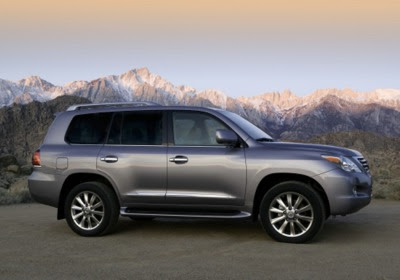
Top Luxury Cars - The Toyota Land Cruiser

Toyota Land Cruiser is one of the most respected names in the world. The massive SUV is capable of travelling in truly hostile conditions and yet give an award winning performance. It has given off-roading enthusiasts a wonderful machine.

Toyota Land Cruiser has a history of 60 long years.It is one of Toyota's longest running models in the world. Its popularity with off-roaders boosted sales and more of them can be seen on streets. It sells more than any other SUV in the world. It has successfully survived eight generations of transformation while remaining true to its core. The SUV has its name etched deeply in the history of great automobiles of the world. The SUV stands for breathtaking durability, robustness and reliability.

It was in 1951 that Toyota made its first four wheel drive vehicle called the BJ. It was later called the Land Cruiser. The very model displayed stunning driveability and stiffness. It was driven up the toughest terrains, the Mouth Fuji, ( which is considered a live volcano) and is based 2,500 meters above sea level. It was done to to prove the cars' amazing prowess. Impressed by its qualities, it was soon an object of interest by car lovers in foreign lands. Within a year Toyota started exporting the vehicle to the largest car markets like United States, Germany and Western Europe. Despite the stiff competition from local made car brands, Land Cruiser fared well in European and American Lands. It became in indispensable part of life for car lovers in Middle East, the tropical South East Asia and the salubrious South American markets. It offered high capability in the toughest terrains that it was introduced.

Such was its popularity in South America that Toyota started a production facility in Brazil in 1959, making it the first Toyota to be manufactured outside Japan. Land Cruiser also participated in Dakar rally, on of the many inter-continental rallies of the world. The vehicle was officially entered by Toyota in 1979. It has always finished among the top performers.

Till 1967, The car wore only green or brown colours, but later it shifted to more car-like colours. In 1967 Toyota introduced the station wagon style Land Cruiser, which increased its appeal among car owners. This station wagon style became a permanent fixture for Toyota over seven generations.

In India Toyota introduced Land Cruiser in 2009. It carries the 268 bhp V8 diesel engine that gives a consistent 200 km/h performance. However, its steep pricing has raised eyebrows among the SUVs enthusiasts. It is available as an imported model.

After 60 years and many generations, Toyota continues to manufacture it in nine locations across the world. It hard earned fame is unlikely to die in the near future. The Car will evolve to adapt in all kinds of weather and terrain.
To read more interesting car articles, visit Carazoo.com
Article Source: http://EzineArticles.com/?expert=V_Divya

Wednesday, February 10, 2010

Chicago 2010: Refreshed Toyota Avalon

2011 Toyota Avalon

Perhaps the only 'surprise' at this year's Chicago Auto Show thus far has been the appearance of Toyota's refreshed-for-2011 Avalon sedan. According to this morning's presentation, even the automaker itself debated postponing its introduction in light of its present woes.

Looking to make the best of a bad situation (and among a string of assurances about his company's commitment to quality and customers), Toyota's Group Vice President and General Manager, Bob Carter, was quick to point out that the full-size sedan will ship with an updated gas pedal and emergency shutoff provision. That housekeeping note done, Carter went on to explain that the full-size Avalon checks off the traditional list of mid-cycle refresh items including revised head- and taillamps (the latter with LED), a new grille, revamped fascias and new alloy wheel patterns.

The bigger story for the revamped Avalon is on the inside, where a handsome new center stack, latest-generation navigation system and added niceties like a standard in-mirror backup camera and Bluetooth streaming audio and telephony have been fitted.

As before, the Avalon is powered by Toyota's 24-valve 3.5-liter V6, tuned here to make 268 horsepower at 6,200 rpm and achieve 20 miles-per-gallon in the city and 29 on the highway. It arrives in dealerships this spring.

[Source: Toyota]

PRESS RELEASE

Toyota Reveals Redesigned 2011 Avalon at Chicago Auto Show


• Distinctive New Styling Offers a Modern, Upscale Appearance
• "Travel Avalon Class" with Segment's Only Reclining Rear Seat and Overall Comfort
• Modern Technologies Provide Comprehensible Convenience

CHICAGO (February, 10, 2010) – Toyota introduced the boldly redesigned 2011 Avalon today at the 2010 Chicago Auto Show. Evoking a time when travel was sophisticated, elegant and comfortable, the new Avalon possesses a distinctive new exterior style while offering a restyled interior rich with premium touch points and practical new technologies.

Even with numerous refinements inside and out, the Avalon remains true to the idea that comfort is honest and uncomplicated, and "Traveling Avalon Class" is rich in simple, familiar pleasures.

The new Avalon has dynamic and expressive lines, and an infusion of comfort, safety and technology advancements that enrich the driving experience. Upgraded equipment and technology features, such as a touch-screen navigation system with real-time traffic, and Bluetooth® hands-free phone capability with music streaming to the audio system are among the improvements that enhance the 2011 Avalon's excellent blend of spaciousness, comfort and technology.

"The Avalon has long been appreciated by smart, conscientious consumers who recognize quality materials and the beauty of detailed craftsmanship," said Bob Carter, group vice president and general manager, Toyota Division, Toyota Motor Sales, U.S.A. "The changes made for 2011 will allow us to build on our position in the premium large car segment. The competition does not stand still, and neither do we."

Restyled at Calty Design Research in Newport Beach, Calif., the Avalon is assembled at Toyota Motor Manufacturing Kentucky (TMMK), a "zero landfill" facility that also assembles the Camry, Camry Hybrid, and Venza. It was also developed at the Toyota Technical Center (TTC) in Ann Arbor, Mich.

Dynamic New Exterior
For 2011, Calty restyled Avalon to project an elegant, outgoing presence. A wider, more substantial grille ties into state-of-the-art projector headlamps, working with a broad, undisturbed front hood to suggest a lowered center of gravity and emphasize the Avalon's wide stance.

The new headlamps, which combine multi-reflector halogen high beams with halogen or HID low beams, utilize light pipes to create a signature, night-time appearance. The front fog lamps, now integrated into a trapezoidal front bumper, provide a wider angle of illumination.

Viewed from the side, the 2011 Avalon is enhanced by additional use of chrome trim, redesigned rocker panels, and glare-resistant outer mirrors with integrated turn signals. New 17-inch wheels on the Limited grade feature a 10-spoke design with a mirror finish.

At the rear of the car, identification is cleanly defined by a single Avalon logo located above the license plate. Dual-exhaust pipes are integrated into the cutaway trapezoid shape of the lower bumper for a modern image. Taillights have been reshaped to reduce turbulence at the rear, helping to create a lower coefficient of drag. The new lights integrate stop, turn and side marker lighting functions in one combined lamp. Unique LED light pipes with dark aluminized sides and both clear and red lenses project a modern appearance.

Spacious Interior Built For Comfort
For 2011, a new interior has been designed with a contemporary style. The new interior remains generously spacious and elegant, fitted with comfortable seating and thoughtfully integrated amenities. Coordinated colors and rich wood-grain materials were carefully chosen to convey an optimistic attitude and modern essence.

Standard leather-trimmed front seats and seatbacks on the Limited are fitted with ventilation systems and an enlarged perforation area to help keep them cool. Interior seats feature thicker stitching, which provides an elegant accent to the interior design. Active front headrests are also standard.

The rear seating area is configured to seat three passengers comfortably, with ample legroom and reclining rear seats, unique in the segment. The rear headrests have also been reshaped and enlarged for better support, and a convenient flip-down center armrest provides storage when the middle seat is not in use.

A power rear sunshade, deployable via a one-touch lever, filters direct sunlight coming through the rear window. The sunshade, which helps to protect rear seat passengers from unwanted light and heat, automatically detracts when the driver selects reverse gear.

A new instrument panel incorporates visually attractive and highly readable Optitron gauges that use graduated white illumination with white pointers. They are set inside smoked lenses and deep chrome rings that add depth and a sense of luxury.

The steering wheel includes controls for Bluetooth hands-free phones, the audio system, climate system, and the information center.

Technology-Enriched Environment
A comprehensive infusion of technology was designed into the new interior to ensure an enriched environment, with enhanced function and connectivity.

New standard equipment includes Bluetooth® hands-free phone and music streaming to the audio system from a compatible device, XM® satellite radio (subscription required), and both USB and 1/8-inch auxiliary connections for iPod® and other audio devices. Each of the three available audio systems can control iPods seamlessly using switches located on the steering wheel and display track information stored in the device.

Toyota's latest DVD Navigation system has a newly adopted database and now has easier search and address input functionality. The Navigation system also offers new displays for road icons and points of interest, and a keyboard screen arranged in the same way as a personal computer.

The Avalon grade's standard nine-speaker system offers exceptional sound quality, while the Limited grade features a standard 12-speaker, 660-watt JBL Premium Synthesis audio system with enhanced two-coil sub-woofer. The system uses 12 speakers and a 12-channel digital amplifier to deliver profoundly rich, full sound to all seats of the vehicle.

A rear-view monitor function is standard in the rear-view mirror or with the navigation system. The rear-view-mirror image includes on-screen back-up guides that help drivers to back into parking spots or driveways.

Performance and Efficiency Combined
Avalon's exceptional combination of ample horsepower and excellent fuel economy offers one of the best overall dynamic performances in the large sedan segment.

The 2011 Avalon is powered by a 24-valve, dual-overhead cam 3.5-liter V6 engine that produces 268 horsepower at 6,200 rpm. The engine is equipped with the latest dual VVT-i electronic valve-control mechanism that provides a broader powerband, while requiring less fuel and generating fewer emissions. It is mated to a multi-mode six-speed automatic transmission.

The 2011 Avalon is an Ultra Low Emission Vehicle (ULEV), EPA-estimated to deliver 20 mpg in the city, 29 highway, and 23 combined, as good as or better than any V6 model in the segment.

A roadworthy mix of fine ride quality and accurate driving control is delivered by the Avalon's MacPherson strut suspension, which uses coil springs at all four corners. Rack-and-pinion steering combines with front-wheel-drive and optimized steering gear for a natural handling feel.

Simple Comforts Throughout
A dual-zone climate control system has nine air-flow modes for more precise control of interior climate, and a clean-air filter removes dust and pollen. Doors use three stop positions instead of two for easier entrance and exit. A lockable glove box has a pneumatic-door damper and inner box illumination. The front-console box has a sliding armrest that moves 4.7 inches front to rear, able to accommodate a wide range of driver positions. The elegantly stitched top is padded with a double density cushion material for softness. Inside, there is a 12-volt outlet in addition to the USB and auxiliary audio terminals.

Safety is Standard
The new Avalon's occupant-safety strategy includes use of extensively tested energy absorbing structures, protective side impact beams and overhead structure, advanced belt systems and active front headrests as standard equipment. Avalon will also have a redesigned accelerator pedal assembly and a brake override system.

Seven airbags, including a front knee bag for the driver, and front side curtain airbags for both rows, are also standard. Toyota's standard Star Safety System includes Vehicle Stability Control (VSC), anti-lock braking system (ABS) with Electronic Brake force Distribution (EBD), Brake Assist, and TRAC traction control system. TRAC and VSC functions can be disengaged if the driver needs to free the vehicle if stuck in mud or snow.

A full-size spare and alloy wheel is standard. Each wheel has its own pressure sensor to warn if tire pressure drops, providing the driver with an early warning to find a safe place to change a tire.

Simplified Packaging
The 2011 Avalon will be available in two grades when it arrives in showrooms in the spring of 2010, Avalon and Limited. Both grades will be well equipped with standard equipment like eight-way leather-trimmed power driver's seats, back-up camera, dual zone automatic climate control with air filtration, moonroof and 17-inch alloy wheels. Limited will have additional standard equipment, such as an eight-way passenger's seat with lumbar support, driver's seat cushion extension, rain-sensing wipers, Smart Key and cooled leather seats. Avalon grade can be upgraded with features like a JBL Synthesis sound system and heated front seats, while Navigation is optional for both grades.

Color and Trim
Avalon will be available in nine exterior colors including three new colors: Zephyr Blue Metallic, Cypress Pearl and Sizzling Crimson Mica. Additional colors include Cocoa Bean Metallic, Blizzard Pearl, Classic Silver Metallic, Magnetic Gray Metallic, Black, and Sandy Beach Metallic. Avalon grade will be mated to three leather-trimmed interior colors: Ivory, Light Gray, and Black. Limited grade receives Ivory, Light Gray, and Black Bordeaux trims with accent-color trim on the vertical surfaces.

Limited Warranty
Toyota's 36-month/36,000 mile basic new-vehicle warranty applies to all components other than normal wear and maintenance items. Additional 60-month warranties cover powertrain for 60,000 miles and corrosion with no mileage limitation. Toyota dealers have complete details on the limited warranty.

The redesigned 2011 Avalon will begin arriving at Toyota dealerships nationally in spring 2010.

Monday, February 8, 2010

Toyota to extend recall run to Prius and Lexus HS over braking issue

F1 Live Streaming

While Toyota still hasn't officially recalled the Prius, they have admitted the world's most popular hybrid has potential brake problems. The company is now also looking into whether the Prius' country club cousin, the Lexus HS250 hybrid, and the Japan-only Sai hybrid, which is based on the HS, might also need their brakes fixed. As of yet, nothing has been decided, but we expect more news soon.

It's also being reported by the Japanese media and The New York Times that Toyota will issue a global recall for the Prius early this week, and Automotive News reports that the car's brake problems will be fixed with a software update to the anti-lock braking system. With news of the Prius' brake problems spreading, reports of problems are increasing dramatically. While there were just over 100 complaints lodged with the National Highway Traffic Safety Administration as of last week, there are now over 800, a good sign that Toyota needs to do something, and soon.

[Sources: New York Times, Automotive News]

Tuesday, February 2, 2010

toyota auris hybrid


Toyota Auris Hybrid


Toyota has confirmed it will start making a hybrid model of its Auris hatchback in Britain from next year.

The world’s biggest carmaker said that production of the hybrid Auris would start at its factory in Burnaston, Derbyshire, in mid-2010, safeguarding 400 jobs.

Engines will be produced at Toyota's facility in Deeside, North Wales.

The Auris hybrid will share the 1.8liter gasoline engine and electric motor with the new Prius, which has the lowest carbon dioxide emissions of any five-seater car, at 89g per kilometer, and an official average fuel consumption figure of 72.4mpg U.K.

Toyota’s UK operations began production in 1992 and employ about 4,100 workers.

The plant has produced over 2.5 million vehicles to-date, including the Carina E, Corolla, Avensis and Auris, for sale in Europe and export overseas.

The Toyota Auris hit the European market place in spring 2007. Since then, it has sold over 370,000 vehicles. Under the new Toyota Optimal Drive technology, Auris now comes equipped with a 1.33-litre dual VVT-i engine and Toyota’s Start&Stop technology, reducing CO2 emissions by 17% (135 g/km) and improving fuel consumption by 19% (48.7 mpg UK).


Wednesday, January 20, 2010

Top 10 Most Popular Cars 2010

Top 10 Most Popular Cars 2010

The crowning 10 Most favourite cars this 2010 according to popularity, durability, concept, safetinis and satisfaction according to the people who buy this cars. This is also the crowning 10 most favourite 2010 cars according to forbes magazine.

1. Lexus GX

2. Audi Q7

3. Toyota RAV4

4. Lexus LX

5. Toyota Prius

6. BMW X3

7. BMW X5

8. BMW X6

9. Audi Q5

10. Toyota Matrix

Monday, January 18, 2010

Toyota FT-CH


Believe it or not, Toyota thinks the Prius is a midsized hybrid electric vehicle, which is why it has created the diminutive FT-CH. It is about 22 inches shorter than its gas-electric counterpart, but just as wide. The slight change in length has a staggering visual effect though, so — as you can see — the FT-CH looks much better than the more appliance-like Prius. Flared hips make up the rear of the car, while a low-slung roofline and a swept C-pillar add some sport. The car is said to be inspired by the "8-bit" generation (read: video gamers), and it's clear that is the group the effort targets. Toyota says the FT-CH is best-suited for quick urban drives.

Sunday, January 17, 2010

The Toyota Celica


Soon after Toyota their own \"Ultimate Celica\" on the line: GT-Four ST165 in the Asian domestic market (JDM). The GT-Four included full-time all wheel drive and a electronically dominated bicentric locking differential. The turbo charged edition of the GT-S 2. litre was rated at 190 HP which was the 3S-GTE engine. At the instance the GT-S immediately took flagship as the Celica range and became the official Toyota rally car, for all 4 eld of production.

In 1987 Toyota began to export the Celica GT-Four revised as the All-Trac Turbo in North America. The All-Trac became acquirable in the 1988 US help year, the All-Trac system was also offered with the Corolla, Camry, Previa but without the turbo for a limited time. The North American edition was rated 190 BHP, Toyota chose to ready the suspension the aforementioned and not modify it drastically. The ST165 chassis face suspension for the AWD GT-Four kept MacPherson struts with an anti-swaybar and gait tower brace, the rear employed struts with chase link and twin passing course per side + an anti-swaybar.

As the GT-Four was the Ultimate Celica of the instance it made its World Rally debut in 1988 of Tour de island and finished 6th. The Celicas first victory came in 1988 Cyprus in a non-WRC, still the Celica was successful in the WRC Rally in Australia of 1989.

The Celica was again still acquirable in the mass trims: ST, GT, and GT-S as either coupe, liftback models. The GT help was offered as a soft-top convertible, the ST and GT were given a SOHC 8 regulator 2.0 litre 97 HP engine. They quickly changed to a newborn DOHC engine rated at 116 for the 1987 help assemblage which was shared with the Camry. The GT-S came with a 135 HP engine which is a edition of the DOHC 2.0 litre featuring T-VIS. The GT-Four famous to North America as the All-Trac Turbo was released for the 1988 help year.

*T-VIS: Toyota Variable Induction System, improves low end torque of high action four stroke interal oxidization engines.

View the toyota celica website, Many wallpapers, history on the Toyota Celica and awful concept models!

Article Source: http://EzineArticles.com/?expert=Adrian_W_Hryniewicki